
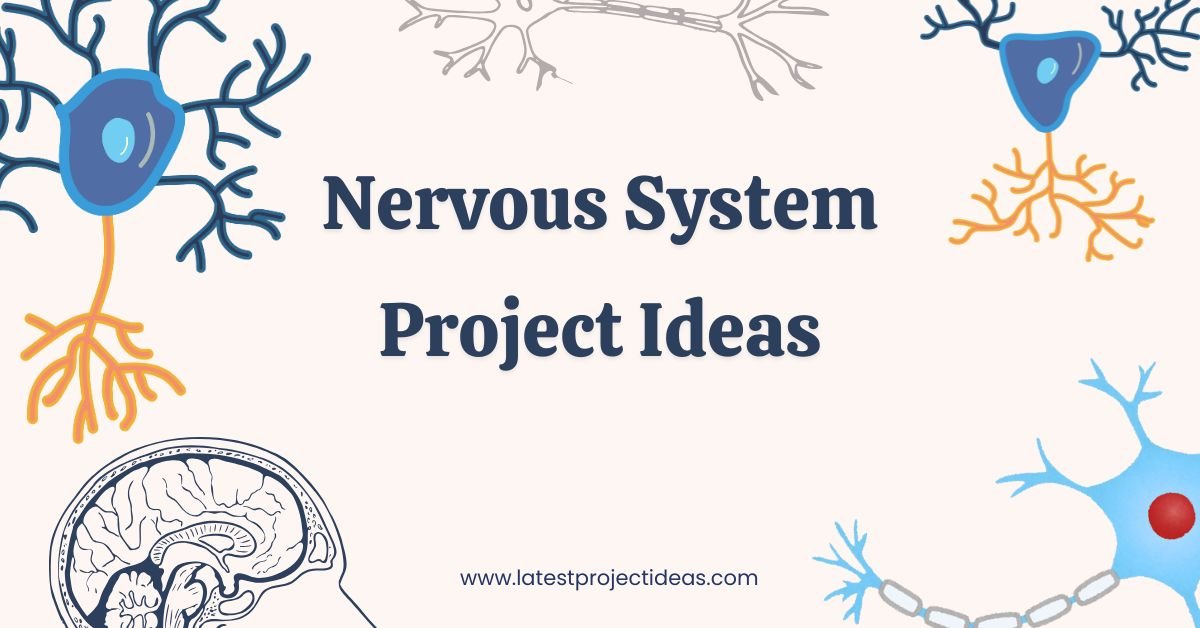
The human nervous system is one of the most fascinating topics in science, and students often search for simple and creative nervous system project ideas for their school or college assignments. Whether you are preparing a biology project, science exhibition, class model, or working on a group activity, making a nervous system project helps you understand how signals travel through the body. In this blog, you will find the best 100 nervous system project ideas that are beginner-friendly and easy to create. These ideas use simple materials like cardboard, clay, charts, LEDs, wires, clay, colors, and recycled items.
This guide is written in very easy language and completely SEO friendly, so you can quickly choose the best project idea and start building an impressive nervous system model for your next exhibition.
What Is a Nervous System Project?
A nervous system project is a creative way to understand how the brain, spinal cord, and nerves work together to control our body. These projects can be built using simple materials and are commonly used in school science fairs, biology experiments, class assignments, and practical demonstrations. A nervous system project may include 3D models, charts, working models, clay sculptures, diagrams, labeled displays, or interactive activities that show how signals move through neurons.
These projects help students learn about important parts like the brain, cerebrum, cerebellum, spinal cord, motor neurons, sensory neurons, synapses, reflex actions, and nerve pathways. By building a project, students get a visual understanding of concepts that are often difficult to learn from books alone. Nervous system projects are suitable for students from Class 5 to Class 12 and even for college-level biology learners. They improve creativity, learning, and confidence while making science fun and easy to understand.
Also read: Ceramic Project Ideas
100 Best Nervous System Project Ideas
Here are the top 100 nervous system project ideas, written clearly and simply:
- 3D human nervous system model
- Clay model of the brain
- Chart of the central nervous system
- Spinal cord model using straws
- Reflex action working model
- Neuron model using wires and beads
- Brain diagram on thermocol
- Sensory neuron 3D sculpture
- Brain and spinal cord clay model
- Labeled chart of the peripheral nervous system
- Working nervous system using LED lights
- Brain hemisphere comparison chart
- Reflex arc model using simple circuits
- Human brain puzzle board
- Cardboard model of nerve pathways
- Clay model of motor neurons
- Brain cross-section model
- Play-dough model of nerves
- Simple neuron chain using yarn
- Brain lobes colored chart
- Spinal cord 3D representation
- Brain made from paper mache
- Nervous system poster for classrooms
- Neuron transmission animation model
- Brain 3D printed design (if available)
- Model explaining synaptic gap
- Brain and nerve mapping chart
- Reflex action with toy hammer
- Model of nerve signal flow using string
- Human nerve network on cardboard
- Sensory organs connected to nervous system chart
- Touch-sensitivity test project
- Memory and brain function experiment
- Reaction time test for students
- DIY neuron diagram using sticks
- Clay cerebellum model
- Brain-connected organ chart
- Spinal nerves labeled model
- Neuron firing model using bulbs
- Cardboard nerve cell
- Sensory system explanation chart
- Brain protection model (skull + brain)
- External human brain sculpture
- Model of nerve endings in skin
- Brain disease awareness chart
- Spinal cord reflex experiment
- Brain cells made from cotton
- Central vs peripheral nervous system model
- Clay spinal vertebrae
- Brain balancing experiment
- Full-body nervous system diagram
- Brain coloring chart for kids
- Action potential working model
- Brain circuit model using simple switches
- Brain neuron connectivity map
- Brainstem clay model
- Nerve impulse demonstration using dominoes
- Sensory reaction experiment
- Simple brain model with balloons
- Nerve transmission string experiment
- 3D model of spinal nerves
- Brain information flashcards
- Neuron model using pipe cleaners
- Model of neurotransmitter release
- Science fair tri-fold nervous system board
- Brain and spinal cord wooden model
- Labeled nerve chart for students
- Model of dendrites and axons
- Hand reflex test activity
- Brain model using foam sheets
- Nervous system made with wool
- Brain hemisphere activity chart
- DIY neuron with clay and toothpicks
- Poster explaining neuron structure
- Spinal reflex arc clay model
- Brain health awareness project
- Nervous system connections map
- Mind–body coordination experiment
- Memory test project
- Neuron network using beads
- Brain and nerves shadow chart
- Spinal cord model using pipes
- Sensory nerve model in hand
- Nervous system blueprint on chart
- Brain 3D wall hanging model
- DIY reflex hammer experiment
- Brain layers explained with colored clay
- Nerve impulse direction board
- Nerve signal relay race activity
- Brain model made with cardboard
- Eye–brain coordination test
- Panel showing neuron types
- Nerve pathway map in human body
- Brain functioning diagram
- Synapse 3D clay structure
- Poster on brain lobes and functions
- Brain–computer comparison project
- Human nervous system made with strings
- Brain and spinal cord interactive board
- Complete nervous system model on thermocol
Benefits of Making a Nervous System Project
Creating a nervous system project offers many educational advantages for students of all ages. When you make a project with your own hands, you understand science concepts more deeply because you see them visually instead of just reading about them. Nervous system topics like neurons, reflex actions, synapses, and brain functions are often difficult to imagine. But through models, charts, and working demonstrations, students get a clear and simple understanding. Nervous system projects also improve creativity and problem-solving skills because students must think about how to represent the structure in an easy and understandable way.
These projects are perfect for science exhibitions and school competitions because they look attractive and informative. By presenting the project to teachers or judges, students build confidence and communication skills. Projects also encourage teamwork when done in groups. Overall, making a nervous system project helps students gain practical knowledge while making the learning experience fun and interactive.
How to Choose the Best Nervous System Project Idea
Choosing the right project idea is important if you want your nervous system model to be simple, effective, and impressive. First, think about your class level. Younger students should choose easier models like charts, simple neuron diagrams, or clay models. Older students can choose more advanced projects such as working reflex arc models, neuron transmission demonstrations, or LED-based nervous system displays. Another important factor is the time you have. If you have only one day, choose something quick like a labeled chart or a 2D diagram. If you have a week, you can try a 3D brain model or a full-body nervous system model.
Also consider the materials available to you. Many nervous system project ideas can be made using thermocol, cardboard, wool, clay, beads, and colors. If you want to stand out in a science fair, choose a unique working model like nerve impulse simulation or reaction time experiments. The best project is the one that is both easy for you and impressive to your teacher or audience.
Also read: Easy Ideas For Lego Storage
Conclusion
Nervous system projects make science interesting by helping students understand how the brain, spinal cord, and nerves work together. In this blog, you explored 100 of the best nervous system project ideas, all explained in simple language. Whether you want to make a chart, 3D model, clay sculpture, or working experiment, these ideas will help you create an impressive project for your class or science fair. Nervous system models are not only educational but also fun to build, and they help you learn important biology concepts in a hands-on way. Choose the idea that matches your skill level, gather your materials, and enjoy the process of creating a meaningful and creative nervous system project.