Education has always played an important role in human development, but its importance has grown significantly in the modern world. Today, societies place strong emphasis on education because it shapes economic growth, social stability, innovation, and individual opportunity. Governments invest heavily in education systems, employers prioritize skilled workers, and individuals view education as a foundation for personal and professional success.
This growing focus on education is not accidental. Modern challenges require knowledge, adaptability, and critical thinking. As the world becomes more interconnected and complex, education serves as a key tool for progress and resilience. Understanding why there is so much emphasis on education in the modern world helps explain how societies prepare people for the future.
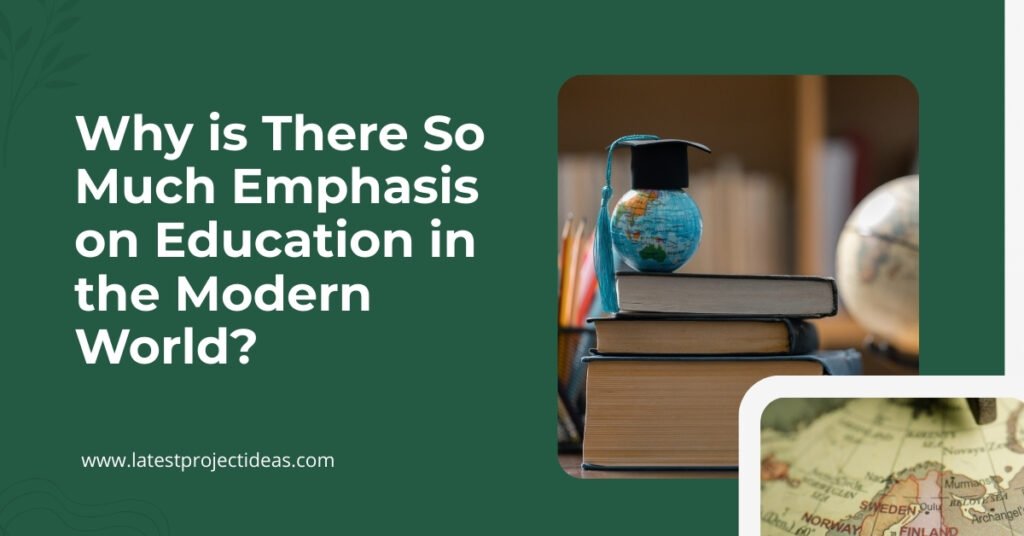
Why is There So Much Emphasis on Education in the Modern World?
Education as the Foundation of Economic Growth
One of the main reasons for the strong emphasis on education is its direct connection to economic development. Modern economies rely on skilled labor rather than manual work alone. Industries such as technology, healthcare, finance, engineering, and research depend on educated professionals who can solve problems and innovate.
Education improves productivity by teaching people how to think critically, communicate effectively, and apply knowledge in practical ways. Countries with higher levels of education often experience stronger economic performance because their workforce adapts more easily to change.
In a global economy, nations compete based on innovation and efficiency. Education equips individuals with skills that help businesses grow, attract investment, and create jobs. This relationship explains why governments treat education as a long-term economic strategy rather than a short-term expense.
Education and Employment Opportunities
Modern job markets demand specialized skills and continuous learning. Unlike the past, when many people worked in the same occupation for life, today’s careers often change several times. Education prepares individuals for this reality.
Formal education provides technical knowledge, while lifelong learning helps people stay relevant. Employers value educated candidates because they tend to learn faster, adapt to new systems, and work independently.
Education also reduces unemployment risks. People with higher education levels usually have more job options and greater income stability. This practical benefit motivates individuals and families to prioritize education as a pathway to security and independence.
Also read: Why Is an Undergraduate Education in Psychology So Helpful in a Number of Different Lines of Work?
The Role of Education in Technological Advancement
Technology shapes nearly every aspect of modern life, from communication to healthcare. Education enables people to understand, develop, and manage these technologies responsibly.
Modern tools such as artificial intelligence, automation, and digital platforms require skilled users and ethical decision-makers. Without education, technology can widen inequality or create misuse. With education, societies can guide technological growth toward positive outcomes.
Education teaches digital literacy, logical reasoning, and problem-solving skills. These abilities allow individuals to use technology effectively rather than becoming dependent on it. This connection explains why education remains essential in a rapidly changing technological world.
Education and Social Development
Education plays a critical role in building stable and inclusive societies. It promotes awareness, tolerance, and cooperation among people from different backgrounds. Through education, individuals learn social values such as respect, responsibility, and fairness.
An educated population understands civic duties, legal systems, and social norms more clearly. This understanding strengthens democratic participation and community engagement. Education also helps reduce social problems by promoting informed decision-making.
In the modern world, societies face challenges such as inequality, misinformation, and social conflict. Education equips people with the tools to analyze issues objectively and respond thoughtfully rather than emotionally.
Education as a Tool for Personal Growth
Beyond economic and social benefits, education contributes to personal development. It helps individuals discover their interests, talents, and goals. Education encourages curiosity and self-reflection, which support lifelong learning.
Modern education focuses not only on academic knowledge but also on skills such as communication, creativity, and emotional intelligence. These skills improve relationships, confidence, and self-awareness.
People with access to education often experience better quality of life because they can make informed choices about health, finances, and personal relationships. This personal empowerment explains why education remains highly valued across cultures.
The Importance of Education in a Globalized World
Globalization connects countries through trade, communication, and migration. Education helps individuals navigate this interconnected world by developing cultural awareness and global understanding.
Modern education systems emphasize languages, international perspectives, and cross-cultural skills. These abilities allow people to collaborate across borders and respect diverse viewpoints.
In a global environment, education also helps individuals compete internationally. Skilled professionals can work in global markets, contribute to international projects, and adapt to multicultural workplaces. This global relevance reinforces the emphasis on education worldwide.
Education and Innovation
Innovation drives progress in science, medicine, engineering, and social systems. Education fuels innovation by encouraging curiosity, experimentation, and critical thinking.
Modern problems require creative solutions. Education trains individuals to analyze information, test ideas, and improve existing systems. Research institutions, universities, and learning centers act as hubs of innovation because they bring together knowledge and experimentation.
Innovation does not happen by chance. It grows from environments that value learning and intellectual freedom. This reality explains why societies that prioritize education often lead in technological and scientific advancements.
Education and Equality of Opportunity
Education serves as a powerful tool for social mobility. It provides individuals from different backgrounds with opportunities to improve their circumstances. While inequality still exists, education remains one of the most effective ways to reduce gaps over time.
By offering access to knowledge and skills, education helps individuals compete based on ability rather than background. Modern societies emphasize education because it supports fairness and equal opportunity.
Inclusive education systems aim to reach marginalized groups and empower them through learning. This focus reflects the belief that education strengthens society when it reaches everyone.
Education and Ethical Awareness
Modern challenges require ethical decision-making. Issues such as environmental protection, data privacy, healthcare access, and social justice demand thoughtful responses.
Education helps individuals understand ethical principles and apply them in real-life situations. Through discussion and analysis, learners develop moral reasoning skills that guide responsible behavior.
An educated society can debate complex issues respectfully and make informed choices. This ethical dimension adds another reason for the strong emphasis on education today.
The Shift Toward Lifelong Learning
In the modern world, education does not end with graduation. Continuous learning has become essential because knowledge and skills evolve rapidly.
Professionals update their expertise through courses, certifications, and self-study. This shift reflects the understanding that education supports adaptability and resilience.
Governments and organizations encourage lifelong learning to maintain competitive workforces. This emphasis reinforces education as an ongoing process rather than a one-time achievement.
Education and Problem-Solving in Modern Society
Modern societies face complex problems such as climate change, public health challenges, and economic uncertainty. Solving these problems requires informed analysis and collaboration.
Education develops problem-solving skills by teaching individuals how to evaluate evidence, consider multiple perspectives, and design solutions. These abilities help societies respond effectively to crises and long-term challenges.
Without education, problem-solving becomes reactive rather than strategic. With education, societies can plan for sustainable progress.
The Cultural Value of Education
Education holds cultural significance beyond practical outcomes. Many societies view education as a symbol of progress, wisdom, and achievement. Families often encourage education as a legacy for future generations.
This cultural respect for education strengthens its role in modern life. When societies value learning, they invest in schools, teachers, and research. This investment creates a cycle of growth and improvement.
Challenges Despite the Emphasis on Education
Although education receives strong emphasis, challenges remain. Access, quality, and relevance vary across regions. Modern education systems must adapt to diverse needs and learning styles.
Addressing these challenges requires continuous improvement and innovation in teaching methods. The emphasis on education reflects both its importance and the responsibility to improve it.
Why Education Will Remain Central in the Future?
The future will likely bring new technologies, industries, and social structures. Education prepares individuals to face uncertainty with confidence and adaptability.
As societies evolve, education will continue to support economic stability, innovation, and social cohesion. This enduring relevance ensures that education remains a top priority worldwide.
Also read: 100 Days of School Project Ideas Kindergarten
Final Thoughts
There is so much emphasis on education in the modern world because it shapes nearly every aspect of human progress. Education supports economic growth, personal development, social stability, and innovation. It equips individuals with skills, knowledge, and values needed to navigate a complex and interconnected world. As challenges evolve, education remains the most reliable tool for building resilient individuals and forward-looking societies. Prioritizing education is not just an investment in knowledge; it is an investment in the future of humanity.

Hi, I’m Emma Caldwell, the founder of LatestProjectIdeas.com. With over 3+ years of experience in educational content, project research, and academic resources, I am passionate about helping students, researchers, and innovators discover valuable ideas. Our website provides science project ideas, school projects, engineering projects, research topics, and creative project inspiration for learners of all levels. Every article is carefully researched and designed to be practical, informative, and easy to understand. Our mission is to make learning, innovation, and project development more accessible for everyone.