
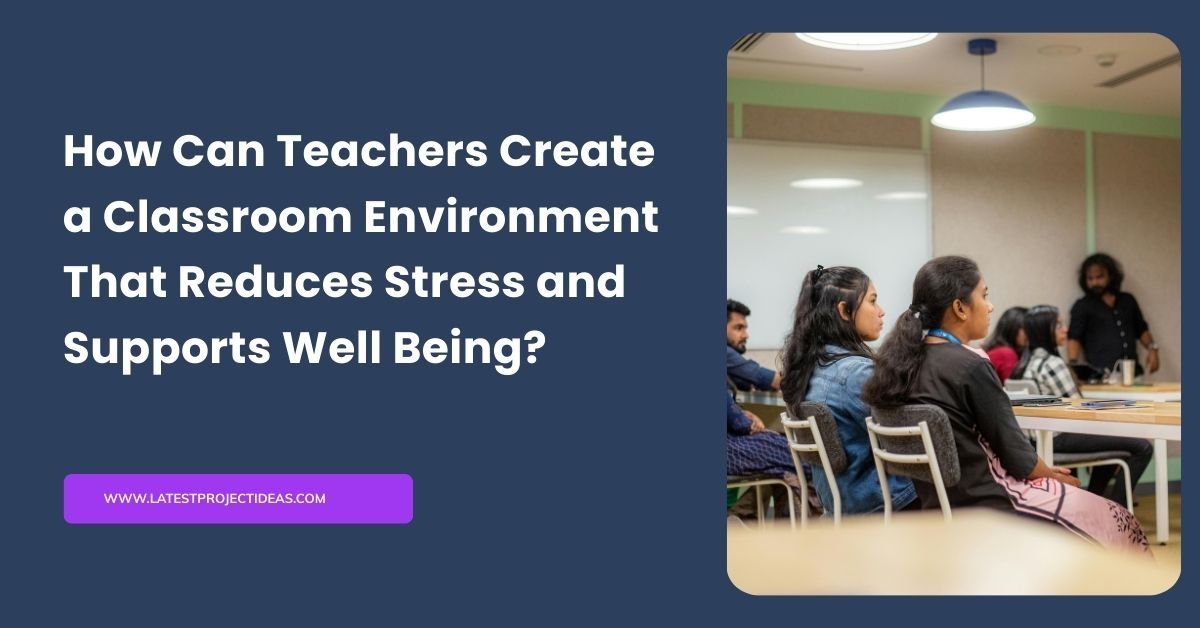
A classroom is more than four walls, desks, and a blackboard. It is a social space where students think, feel, interact, and form beliefs about themselves. A student’s emotional and mental state naturally affects their ability to learn. The question many educators ask today is simple but transformational. How can teachers create a classroom environment that reduces stress and supports well being
The importance of this topic is backed by evidence. The Centers for Disease Control and Prevention states that mental health and emotional safety are directly linked to learning outcomes. UNICEF and UNESCO also highlight that stress in school environments can reduce concentration and increase dropout rates. That means student achievement requires more than good academic content. It requires a learning ecosystem where children feel safe, encouraged, respected, and confident.
This blog explains how teachers can reduce stress in classrooms, how school environments influence well being, and what realistic, research-supported methods teachers can use in any school environment, including low-resource settings.
Why Stress Reduction in Classrooms Matters?
Stress does not belong only in the world of adults. Students experience stress due to peer pressure, homework load, exams, home challenges, or lack of confidence. According to the American Psychological Association, children show signs of stress through headaches, sleep issues, and difficulty maintaining focus. When the environment around them feels safe, calm, and structured, their emotional brain relaxes and learning becomes easier.
A classroom that reduces stress and supports well being can improve:
- Focus and attention
- Academic performance
- Social and emotional skills
- Attendance and participation
- Confidence and decision-making
The Education Endowment Foundation in the United Kingdom found that a positive climate in classrooms increases student engagement and long term academic success.
What Does a Stress Free and Well Being Focused Classroom Look Like?
Before asking how can teachers create a classroom environment that reduces stress and supports well being, it helps to imagine what a healthy classroom feels like. It is a place where:
- Students feel respected by teachers and peers
- Children do not fear speaking or making mistakes
- The room feels physically organized and emotionally calm
- Teachers set routines that reduce anxiety
- Students have personal choice and voice
- Learning is active, not only passive listening
A stress reducing classroom does not require expensive décor. It is built on daily practices and teacher mindset.
Also read: Which Primary Facilitators Are Encouraged to Use Career Cards in Schools
How Can Teachers Create a Classroom Environment That Reduces Stress and Supports Well Being?
Below are research supported, proven methods teachers can use.
Build Relationships Before Building Lessons
Students learn from people they trust. Strong student-teacher relationships are one of the biggest predictors of success. Harvard Graduate School of Education research indicates that classrooms based on connection result in higher student motivation.
Teachers can begin the day by:
- Greeting students individually
- Using names when speaking
- Making eye contact
- Asking short check-in questions like “How are you feeling today”
This takes one minute yet has a long-term effect on well-being.
Establish Classroom Routines That Feel Predictable
Children feel calmer when they know what will happen next. Predictability reduces fear and confusion. A daily visual schedule or verbal routine creates emotional safety.
Examples include:
- Beginning every day with a morning warm-up
- Keeping a structured order for classroom tasks
- Ending class with reflection time
Routine does not mean rigidity. Routine gives students structure so that their brain can focus on learning rather than wondering what comes next.
Create a Physically Calm Space
Research from the National Association of School Psychologists shows that classroom environments affect emotional state. A calm space does not mean expensive materials. A few simple practices help:
- Keep desks and supplies organized
- Reduce loud clutter and unnecessary noise
- Add a small quiet area where students can reset
- Use natural light or balanced artificial lighting
- Use color tones that calm rather than overwhelm
Environment influences mood. When students walk into a classroom that feels calm, their brain prepares to learn.
Allow Student Voice and Choice
Stress grows when students feel forced without control. Giving students choice supports autonomy. This practice is supported by the Self-Determination Theory in educational psychology.
Choice can be simple:
- Selecting which book to read first
- Choosing partners for group work
- Offering two assignment formats, such as drawing or writing
Choice builds motivation and reduces fear of failure.
Use Emotionally Supportive Language
The language teachers use can either increase stress or reduce it. Supportive communication helps students feel valued. Examples include:
- I see that you tried your best
- Mistakes are part of learning
- You belong here
- You can ask for help any time
Avoiding shaming statements protects student dignity and mental health.
Teach Emotional Management Skills
Well being requires learning emotional tools. Classroom time can include short activities such as:
- Breathing exercises for one minute during transitions
- Sharing one word about feelings
- Journaling thoughts at the end of class
The World Health Organization recommends social emotional learning programs for schools to reduce long term stress. Teaching students emotional vocabulary helps them handle difficult moments.
Build a Supportive Peer Culture
Peers influence students deeply. Bullying, exclusion, and embarrassment increase stress. Teachers can create supportive communities by:
- Modeling respect in every interaction
- Assigning mixed ability groups
- Encouraging students to lift each other up
- Teaching conflict resolution strategies
A student who feels supported by classmates will show greater willingness to learn.
Reduce Overemphasis on Marks
Marks matter, but emotional health matters more. Pressure to score high is a common source of anxiety. According to UNICEF, exam pressure is a major contributor to stress in students in Asia.
Teachers can reduce stress by:
- Focusing feedback on effort rather than perfection
- Allowing revision opportunities
- Helping students set realistic goals
Progress becomes motivating when students see learning as a journey, not a competition.
Integrate Movement Into Learning
Physical activity reduces stress and improves attention. Harvard Medical School reports that movement increases blood flow and supports brain performance.
Teachers can add movement by:
- Short stretching breaks
- Group activities requiring standing or walking
- Outdoor lessons when possible
Movement refreshes the mind and improves well being.
Use Art, Music, and Play
Art, music, and play allow emotional release. They make learning joyful. UNICEF Early Childhood Development Guidelines recommend play-based approaches for emotional safety.
Teachers can:
- Use music for transitions
- Let students draw during reflection
- Add playful elements like games to review lessons
Joy is not extra. It is a core mental health need.
Communicate With Parents About Student Stress
Teachers are not alone in supporting children. Parents must be included. Parent communication can help teachers identify stress sources and support well being.
Conversations should focus on partnership. Questions can include:
- What is helping your child right now
- Are there challenges at home that we should be aware of
- How can we support your child together
When school and home work together, students thrive.
Know When to Seek Mental Health Support
Teachers support well being, but they are not mental health professionals. If a student shows ongoing signs of emotional distress, self-harm ideation, or extreme withdrawal, teachers must connect the situation to a school counselor or trained school authority. Safety comes first.
This principle aligns with UNESCO Child Safety and Well Being guidelines.
A Practical Classroom Model That Reduces Stress
A stress-reducing classroom includes:
- Warm relationship at entry
- Predictable structure
- Calm environment
- Emotional expression time
- Choice based learning
- Movement breaks
- Play and creativity
- Positive communication
- Parent collaboration
- Support from specialists when needed
This model is both research-supported and realistic for any school to attempt.
How Teachers Can Begin in One Week
Teachers can begin without large changes. A simple one-week plan may include:
Day One greet every student personally
Day Two organize one shelf and remove clutter
Day Three integrate a movement break
Day Four include a student choice activity
Day Five send one positive update to parents
Day Six create a one minute breathing ritual
Day Seven reflect and adjust
Small consistent actions shape long term culture.
Also read: Embroidery Project Ideas for Beginners & Experts
Conclusion
Education succeeds when students feel emotionally supported. When teachers ask how can teachers create a classroom environment that reduces stress and supports well being, the answer begins with relationship, structure, empathy, and practical routines. A teacher cannot solve every difficulty a student faces, but they can shape how a student feels while learning.
A classroom that reduces stress creates confident thinkers. A classroom that supports well being builds emotionally resilient human beings. This is the foundation of great teaching and the future of meaningful education.