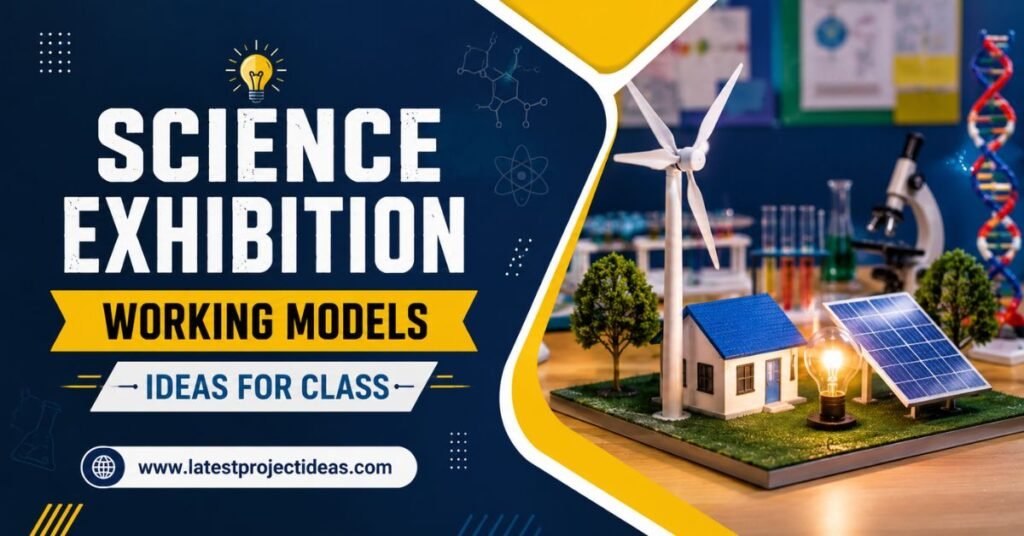
Finding the best science exhibition working models ideas for class 12 can be challenging, especially when you want something creative, easy to understand, and impressive at the same time. Class 12 students need working models that clearly explain scientific concepts while also showing innovation and practical use. These models help students develop skills like research, critical thinking, and problem-solving. The good thing is that you don’t always need expensive materials—many working models can be made using simple items.
In this blog, you will find the best 50 science exhibition working models ideas for class 12, all explained in an easy language so you can choose the perfect one. Each idea is explained in two lines to help you understand the concept quickly and start working on it with confidence.
What Are Science Exhibition Working Models?
Science exhibition working models are practical demonstrations that show how a scientific concept, process, or system works in real life. These models help students understand theories by converting them into physical, working structures. Instead of only reading from textbooks, students get hands-on experience by building models that move, react, generate power, or show scientific principles in action.
For Class 12 students, such models become even more important because they link school learning with real-world technology. Working models can be related to physics, chemistry, biology, environment, electronics, robotics, or renewable energy. These projects show creativity and innovation and can even be developed into research ideas.
Science exhibition working models build confidence, improve technical skills, and help students explain scientific concepts in a clear way. They encourage teamwork and curiosity, making learning more enjoyable. With the right materials and planning, students can create impressive models that stand out in any exhibition or competition.
Also read: Creative Pyramid Project Ideas
Top 50 Science Exhibition Working Models Ideas for Class 12
1. Solar Tracking System
A model that automatically follows the sun to increase solar panel efficiency.
It shows renewable energy concepts and smart sensor-based technology.
2. Hydraulic Lift System
Uses water pressure to lift objects using syringes and tubes.
Explains Pascal’s law and hydraulic mechanisms.
3. Wind Turbine Power Generator
A small turbine that generates electricity using wind energy.
Shows how renewable energy can replace traditional power sources.
4. Smart Irrigation System
Soil moisture sensors turn water supply on and off automatically.
Demonstrates smart farming and water conservation.
5. Rainwater Harvesting Model
Shows how rainwater can be collected and stored for use.
Helps explain water management and sustainability.
6. Earthquake Alarm System
A vibration sensor detects ground movement and triggers an alarm.
It teaches disaster management and early warning systems.
7. Automatic Street Light System
Lights turn on automatically at night and off during the day.
Uses LDR (light-dependent resistor) to save electricity.
8. Water Purification Model
Shows filtration using sand, charcoal, and gravel layers.
Explains how clean water is produced naturally and artificially.
9. Smart Traffic Light System
Traffic lights adjust timing based on vehicle density.
Demonstrates real-life traffic control using sensors.
10. Magnetic Levitation Train Model
A train floats using magnet repulsion, reducing friction.
Shows modern transportation technology.
11. Solar Desalination Plant
Uses sunlight to convert salty water into drinkable water.
Explains thermal evaporation and condensation.
12. Robot Arm Using Arduino
A robotic arm controlled by sensors or joystick.
Shows automation and robotics engineering.
13. Emergency Flood Alarm System
A water sensor activates a buzzer when water level rises.
Helps explain flood warnings and safety systems.
14. DNA Extraction Working Model
Shows how DNA is extracted from fruits like banana or strawberry.
Explains genetics and molecular biology.
15. Smart Home Automation Model
Control lights, fans, and appliances using a mobile app.
Demonstrates IoT and smart technology.
16. Biogas Plant Model
Shows how organic waste produces gas used for cooking.
Teaches renewable energy and waste management.
17. Air Pollution Monitor
Sensors detect pollutants like CO₂ and dust particles.
Shows environmental monitoring systems.
18. Electric Bell Working Model
Explains electromagnetism with a simple coil and bell.
Shows how electric buzzers work.
19. Water Level Indicator
LED lights show water tank levels using a simple circuit.
Helps explain conductivity and automation.
20. Heart Pump Working Model
Uses balloons and tubes to show how the heart pumps blood.
A great biology-based working demonstration.
21. Solar-Powered Car
A small car powered by a mini solar panel.
Shows clean energy use in transportation.
22. Fire Alarm System
A temperature sensor triggers an alarm during overheating.
Explains safety and electrical circuits.
23. Robotic Vacuum Cleaner Model
Moves automatically to clean an area.
Explains automation and smart electronics.
24. Electrolysis of Water
Separates water into hydrogen and oxygen using electricity.
Shows chemical reactions and energy transformation.
25. Hand Crank Generator
Rotating a handle produces electricity.
Explains kinetic energy conversion.
26. Smart Dustbin Model
Opens its lid automatically when someone comes near.
Uses ultrasonic sensors to promote hygiene.
27. Biodiversity Ecosystem Model
Shows plants, soil, water, and animals in a closed setup.
Explains ecological balance.
28. Solar Water Heater Model
Uses sunlight to heat water through pipes.
Teaches renewable thermal energy.
29. Peristalsis Movement Model
Shows how food moves inside the digestive tract.
Helpful in understanding human biology.
30. Windmill Water Pump
Wind rotates blades to pump water.
Shows mechanical and renewable energy.
31. Tesla Coil Mini Model
Generates high-voltage electric arcs safely.
Shows electromagnetic induction.
32. LED Cube 3D Model
LEDs arranged in 3D shape glowing in patterns.
Explains circuits and light programming.
33. Waste Segregation System
Separates dry and wet waste automatically.
Shows environment-friendly technology.
34. Water Rocket Launcher
Uses air pressure to launch a bottle rocket.
Explains Newton’s laws of motion.
35. Smart Fire Sprinkler System
Releases water automatically when heat rises.
Shows home and industrial safety systems.
36. Solar Power Bank
Stores solar energy to charge mobile devices.
Demonstrates battery technology and energy storage.
37. Smart Burglar Alarm
A motion sensor activates an alarm for security.
Explains PIR sensors and home safety.
38. Greenhouse Model
Shows how plants grow inside controlled conditions.
Explains temperature regulation and agriculture.
39. Automatic Plant Watering System
Waters plants at specific intervals.
Teaches automation and moisture control.
40. Rain Sensor Wiper System
Wiper moves automatically when water is detected.
Shows sensor technology in automobiles.
41. Air Cooler Using Solar Power
Runs a small fan and cooling pads using sunlight.
Explains energy efficiency.
42. Portable Water Testing Kit
Tests water pH, turbidity, and impurity levels.
Shows environmental science applications.
43. Automatic Door Opener
Opens automatically when someone approaches.
Explains ultrasonic and servo motor technology.
44. Electroplating Demonstration
Shows how metal objects get coated using current.
Explains chemistry and metal reactions.
45. Smart Wheelchair Prototype
Moves using joystick or sensor controls.
Explains mobility technology.
46. Energy-Saving Smart Fan
Adjusts speed based on room temperature.
Shows thermostat and automation systems.
47. Soil Testing Kit Model
Checks moisture, nutrients, and minerals in soil.
Explains agriculture and environmental science.
48. Solar-Powered Water Fountain
Water circulates using solar-powered motor.
Shows energy conversion and design.
49. Mini Sewage Treatment Plant
Purifies waste water using multiple filtration steps.
Explains wastewater management.
50. Wireless Power Transmission Model
Transfers electricity without wires using coils.
Shows modern electromagnetic technology.
How Science Working Models Improve Skills?
Science working models encourage students to think beyond textbooks and apply scientific principles creatively. When class 12 students build models, they learn teamwork, planning, material selection, and proper execution. These skills help them understand how real scientific systems work and how technology is used in everyday life. They also learn troubleshooting because working models often need adjustments, testing, and redesigning. This teaches patience and analytical thinking. Working models help students express new ideas, experiment with technology, and present their knowledge clearly. This prepares them for college-level science and engineering courses.
Why Working Models Are Important for Class 12 Students?
Working models are important for class 12 because they give practical exposure to scientific principles. Students learn how theories come to life when they create functional prototypes. These projects also help in board viva exams, science fairs, competitions, and technical presentations. Science working models build confidence, communication skills, and creativity. Students learn to present their projects professionally and answer questions confidently. This prepares them for future careers in engineering, medical, IT, research, and more.
Conclusion
Choosing the right science exhibition working models ideas for class 12 can make any project stand out. Working models turn difficult scientific concepts into real, understandable demonstrations. They help students learn practical skills, improve creativity, and build confidence. The 50 model ideas listed above are simple, creative, and suitable for science fairs, competitions, and school exhibitions.
Whether you choose a project related to renewable energy, automation, electronics, or biology, make sure to test your working model properly. With the right planning and effort, any Class 12 student can create an impressive and meaningful science project.
Frequently Asked Questions
Solar tracking systems, smart irrigation models, robotic arms, water purification systems, and automatic street lights are among the most popular Class 12 projects.
Working models improve practical knowledge, problem-solving, creativity, and presentation skills while helping students understand scientific concepts better.
Models like rainwater harvesting, water level indicators, hydraulic lifts, and automatic street lights are easy to build and clearly demonstrate science concepts.
Most projects use affordable materials such as cardboard, sensors, motors, LEDs, wires, batteries, plastic bottles, and simple electronic components.
Working models make learning interactive by showing real-life applications of scientific principles, helping students explain concepts clearly and confidently.

Hi, I’m Emma Caldwell, the founder of LatestProjectIdeas.com. With over 3+ years of experience in educational content, project research, and academic resources, I am passionate about helping students, researchers, and innovators discover valuable ideas. Our website provides science project ideas, school projects, engineering projects, research topics, and creative project inspiration for learners of all levels. Every article is carefully researched and designed to be practical, informative, and easy to understand. Our mission is to make learning, innovation, and project development more accessible for everyone.